
Stamped Concrete Patio Ideas for Margate Backyards
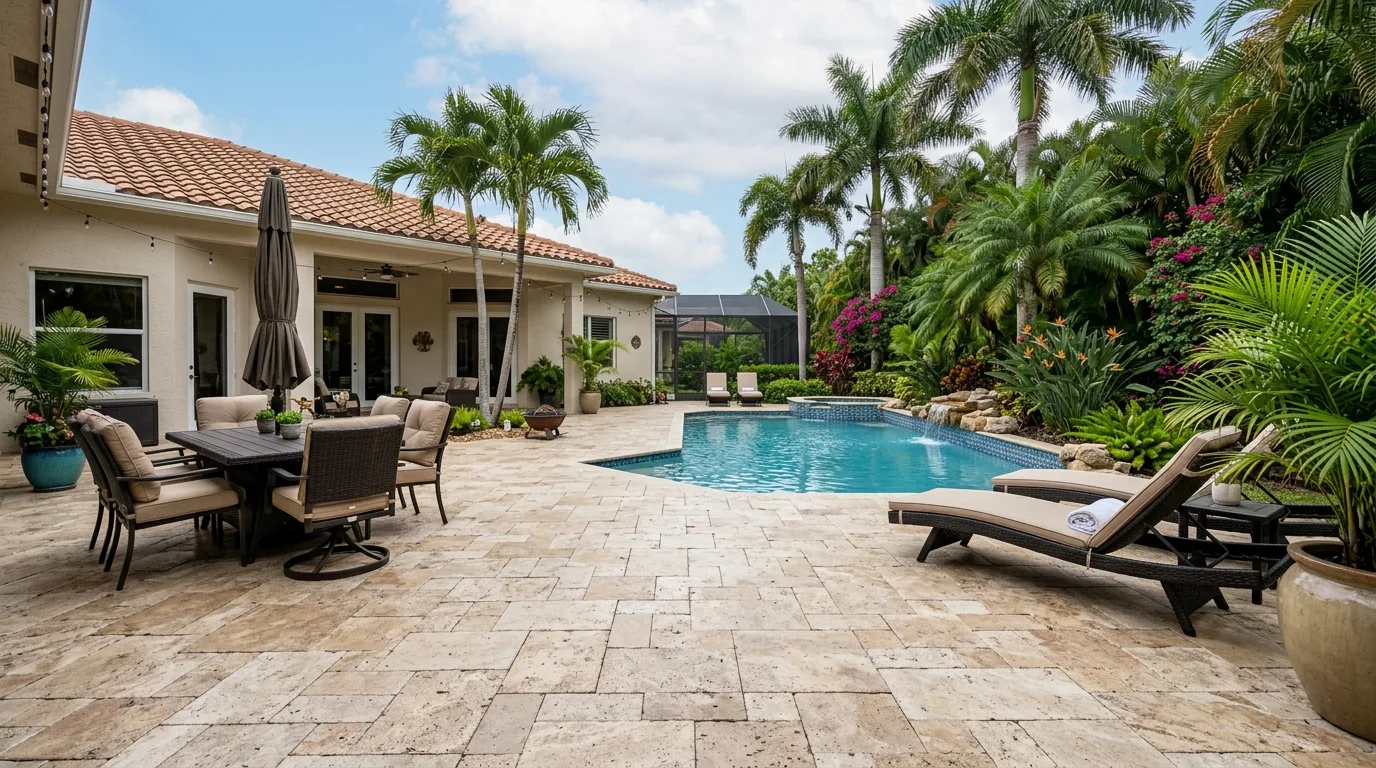
If you’re designing a backyard patio in Margate and haven’t looked closely at stamped concrete, you’re missing the most versatile outdoor surface option available for South Florida living. Margate’s year-round warm weather means a patio gets real use — and a stamped concrete surface makes that use more enjoyable while adding genuine curb appeal and property value. Here are the patterns, colors, and design approaches that work best for Margate backyards, along with what to consider for South Florida’s specific climate.
Stamped Concrete Patios in Margate — Free Design Estimate
We discuss pattern and color options during your free consultation. Call (888) 376-0955.
Why Stamped Concrete Works So Well for Margate Backyards
South Florida’s outdoor living culture makes the backyard patio one of the most-used spaces in a Margate home — and that’s precisely where stamped concrete earns its reputation. Unlike pavers that shift over Broward County’s sandy sub-base, a stamped concrete patio is a monolithic surface that maintains its level and appearance through wet season saturation and dry season drought. Unlike plain gray concrete, it’s visually rich enough to serve as a design feature rather than just a functional slab.
Margate’s subtropical climate is also uniquely kind to stamped concrete longevity. With no freeze-thaw cycle to cause spalling, a properly installed and sealed stamped patio in neighborhoods like Margate Gardens or Coral Lake can hold its pattern and color for 25–35 years. The main maintenance requirement is resealing every 2–3 years with UV-stabilized products to prevent color fade from Broward County’s intense year-round sun.
Popular Stamped Concrete Patterns for Margate Patios
Ashlar Slate: The most popular choice in South Florida. Clean rectangular blocks in a running-bond or random-pattern layout replicate natural stone without the weight or cost. Works with Margate’s Mediterranean and contemporary home styles. Available in light tan, buff, terra cotta, and mixed earth tones that complement Florida landscape palettes.
Cobblestone: Fan-pattern cobblestone creates a classic, old-world aesthetic that appeals particularly to homeowners in Coral Bay and Holiday Springs — neighborhoods with more traditional architecture. The rounded pattern adds visual texture and is available in gray, tan, and multi-color options. Works well at pool surrounds and entertaining areas.
Wood Plank: Stamped to resemble wood decking, this pattern is popular for covered lanai areas where a wood appearance is desired without wood’s maintenance requirements. UV-resistant pigments maintain color under Florida’s sun far longer than actual wood would. Works well for connecting indoor/outdoor spaces where continuity with interior wood flooring is desired.
Flagstone: Irregular-pattern flagstone stamps create a natural, organic look popular in garden patios and around Calypso Cove-inspired tropical landscapes. Available in earth tones — sandstone, slate gray, moss green, and mixed — the irregular shapes allow for creative border treatments and color variation that give each patio a unique finished appearance.
Brick: Running-bond or herringbone brick patterns in red, tan, or weathered tones are a traditional choice that never goes out of style. Works well in front entry patios and connecting walkways. The regular geometry of brick patterns pairs cleanly with landscape design and existing hardscape elements.
Plan Your Margate Stamped Concrete Patio
Margate Concrete Pros installs decorative concrete patios throughout Broward County. Free estimates.
Color Options That Work in Margate’s Light
South Florida’s abundant sunlight affects how stamped concrete colors appear. Colors that look warm and natural in sample books can appear washed out in full Florida sun. Colors to consider for Margate patios:
Earth tones (tan, buff, sandstone): The most popular in Broward County. Complement Florida’s tropical landscaping, don’t show dust, and coordinate with the terra cotta and neutrals common in Spanish and Mediterranean-style homes throughout Margate.
Gray tones (charcoal, slate, pewter): Work well for contemporary home styles and pair with modern landscape design. Lighter grays stay cooler underfoot in South Florida’s heat than dark colors.
Warm neutrals (antique white, light beige): Create a bright, resort-style appearance popular for pool decks and outdoor entertaining areas. Reflective light colors are cooler underfoot in Margate’s summer.
Avoid: Deep dark colors (black, dark brown, dark red) absorb Florida’s heat to the point where the surface becomes uncomfortable for bare feet in summer. If a dark color is desired for aesthetic reasons, consider limiting it to borders or accent areas rather than the full slab.
Design Approaches for Margate Backyards
Multi-zone layouts: Use different stamp patterns or border accents to define distinct patio zones — an outdoor dining area, a lounge seating area, and a transition path to the pool deck. Color variation between zones reinforces the separation without physical barriers.
Border accents: A contrasting stamp pattern or secondary color in a 12–18 inch border frame adds premium detail that distinguishes a custom installation from a single-pattern pour. Popular in Holiday Springs and Margate Estates where homeowners invest in higher-end landscape and outdoor details.
Pool deck integration: Stamped concrete patios that flow continuously into the pool deck create a cohesive outdoor space. Use the same base pattern throughout and differentiate pool deck zones with a slightly different texture or color for visual interest and functional slip resistance near the pool edge.
Indoor-outdoor continuity: For screened lanai areas, coordinate stamped concrete patterns with interior tile or natural stone flooring visible through sliding glass doors. A wood-plank or large-format stone pattern that echoes interior finishes blurs the indoor-outdoor boundary that South Florida living celebrates.
Cost Factors for Stamped Patios in Margate
Stamped concrete patios in Broward County run $10–$18 per square foot installed. A 400 sqft backyard patio costs $4,000–$7,200 for standard single-pattern stamped concrete. Multi-color designs with border accents fall toward the upper end. The premium over basic concrete ($4,000–$7,200 vs. $2,400–$4,000) reflects skilled labor, color materials, and sealing — typically adding $3,000–$4,000 for a mid-size patio.
Long-term cost includes resealing every 2–3 years at roughly $0.50–$1.50/sqft for a Margate patio area. A 400 sqft patio costs $200–$600 per reseal cycle — modest maintenance for a 25–35-year surface that enhances property value and outdoor livability throughout its life.
Frequently Asked Questions
What’s the most popular stamped concrete pattern in Margate?
Ashlar slate is consistently the most requested pattern in Broward County — the rectangular stone look works with the widest range of South Florida home styles and remains popular across both traditional and contemporary designs. Cobblestone is a close second, particularly in neighborhoods with more established or traditional architecture.
Can stamped concrete be used around Margate pools?
Yes — stamped concrete pool decks are popular in Margate. The key is selecting a pattern with good texture depth for slip resistance and a lighter color for heat reflection. Cool deck and kool deck coatings can be applied over stamped concrete for additional heat reflectivity. See our pool deck concrete options guide for Margate for detailed pool deck recommendations.
How do I choose between stamped concrete and pavers for my Margate patio?
Both are strong options. Stamped concrete is typically $2–$6/sqft less installed, more stable over Broward County’s sandy soil (no individual pieces to settle), and has lower ongoing maintenance. Pavers allow individual piece replacement and easier utility access. Read our full comparison in stamped concrete vs pavers for Margate homes.
Design Your Margate Stamped Concrete Patio
Free consultations with pattern and color selection. Call Margate Concrete Pros at (888) 376-0955.
Related: