
Seasonal Concrete Care in South Florida: Protecting Your Investment
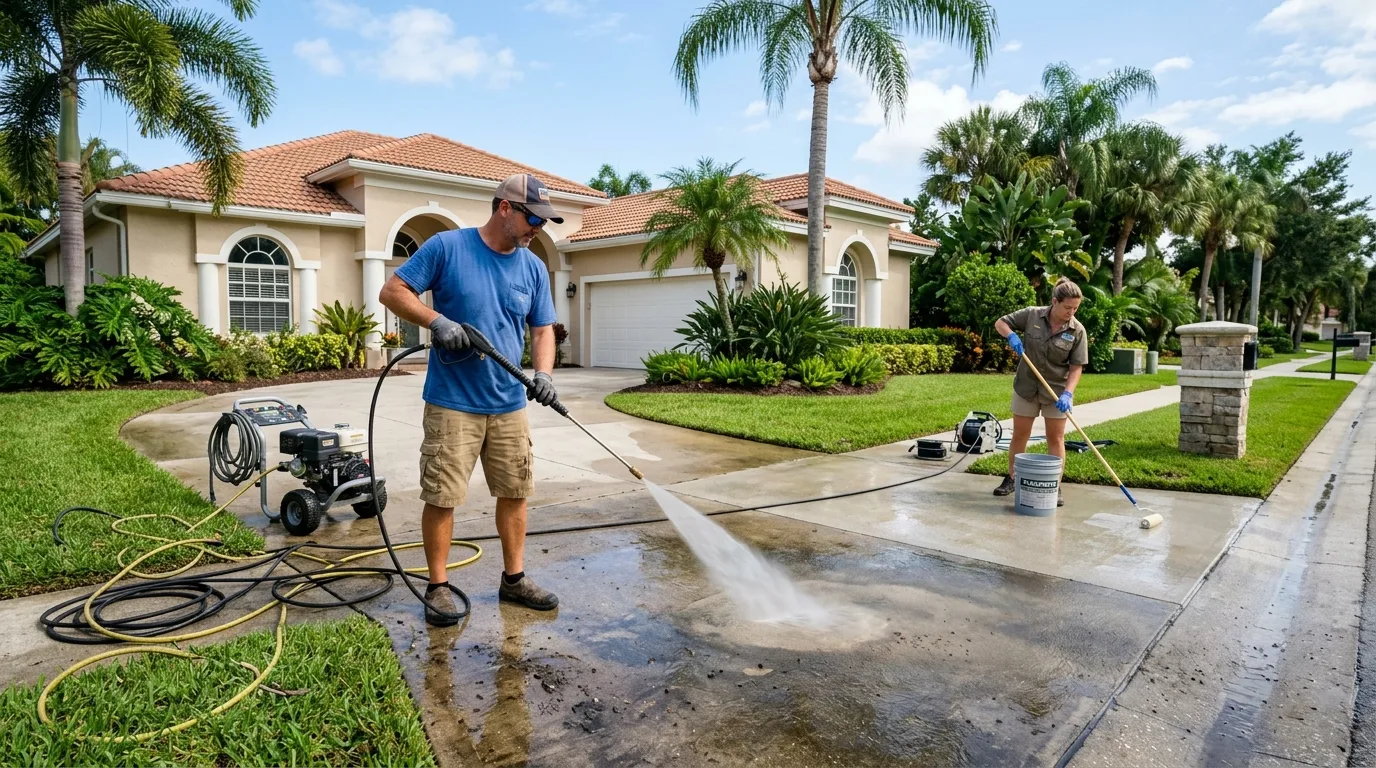
Concrete maintenance in Margate follows a rhythm shaped by South Florida’s two distinct seasons — the wet season from May through October and the dry season from November through April. Each season creates specific threats to concrete surfaces and specific opportunities to address them. Homeowners throughout Broward County who follow a seasonal concrete care routine protect an investment that can last 35–40 years; those who don’t typically find themselves facing repairs or premature replacement within 10–15 years. Here’s the full seasonal care calendar for Margate concrete.
Concrete Repair and Sealing Services in Margate
We provide sealing, crack repair, and maintenance services throughout Broward County. Free estimates.
Why South Florida’s Seasons Require a Different Approach
Concrete care guides written for national audiences focus on winter protection — sealing before freeze-thaw season, avoiding road salt damage, and patching cracks before winter water intrusion. None of that applies in Margate. Our threats are:
- UV degradation: Year-round, but most intense May–September when South Florida’s sun angle is highest
- High seasonal water table: Peaks during wet season (June–September), stressing sub-bases beneath all Margate concrete
- Daily thunderstorms: June–September, creating wet-dry stress cycles on concrete surfaces and joints
- Biological growth: Mold and algae thrive in Margate’s warm, humid conditions year-round
- Heat stress: Summer temperatures above 90°F expand concrete slabs against expansion joints
Understanding these threats by season allows for targeted, efficient maintenance rather than generic care.
Types of Seasonal Concrete Threats in Margate
UV degradation (high season: April–September): South Florida’s UV index routinely reaches 11–12 (extreme) from April through September. UV breaks down cement paste on unsealed surfaces, causing surface scaling and gradual color fade on decorative concrete. In neighborhoods like Margate Estates and Fair Gate where properties get significant western sun exposure, unsealed south and west-facing concrete surfaces show UV damage noticeably faster.
Sub-base water stress (high season: June–September): Broward County’s high seasonal water table peaks during the wet season when Margate’s sandy soils become temporarily saturated. This weakens the bearing capacity beneath concrete slabs and allows them to flex under vehicle loads — widening hairline cracks that were stable in the dry season. Cracks that seemed minor in April may visibly grow by September.
Biological fouling (year-round, accelerated May–October): Mold, algae, and lichen growth on concrete is a year-round issue in Margate but accelerates during the warm, wet summer months. In shaded areas near trees — common in Margate Gardens and Buttonwood Hammocks — algae creates slippery concrete surfaces that are a safety hazard.
Practical Uses: Your Month-by-Month Margate Concrete Calendar
November: First month of dry season. Inspect all concrete surfaces after the wet season. Look for new cracks, heaved sections, changes in drainage patterns. This is the best month to schedule sealing, crack repair, or resurfacing overlays while conditions are optimal.
December–February: Prime maintenance window. Optimal temperature (65–78°F) and low humidity. Schedule any resurfacing, concrete replacement, or decorative concrete installation. Power wash accumulated biological growth from summer. Apply sealer if it’s been 2+ years or if water no longer beads on the surface.
March–April: Good conditions but watch rising temperatures. Schedule major projects before May. Apply sealer in early April if not done in winter. Last good window before wet season.
May: Transition month. Temperatures climbing, afternoon storm frequency increasing. Avoid scheduling large pours. Apply a protective coating to exposed aggregate or stamped surfaces before wet season UV exposure peaks.
June–September: Wet season peak. Focus on monitoring rather than major maintenance. After each heavy rain, check drainage patterns — water should move away from structures. Note any new crack development or settling. Clear debris from expansion joints that fill during storms. Avoid major sealing or resurfacing during this period — humidity affects adhesion.
October: Excellent maintenance window that many Margate homeowners overlook. Storm frequency drops, temperatures moderating. Good month for repairs and pool deck maintenance before the dry season peak demand.
Schedule Your Margate Concrete Maintenance Today
We handle sealing, crack repair, and seasonal inspections throughout Broward County. Call (888) 376-0955.
The Sealing Schedule for Margate Concrete
Sealing is the most critical maintenance task for concrete longevity in Margate. The UV exposure in Broward County demands a shorter resealing interval than most guides recommend for northern climates:
When to reseal:
- New concrete: Wait 28–30 days, then apply first sealer coat
- Ongoing: Every 2 years for stamped and decorative concrete in full sun
- Every 2–3 years for standard concrete driveways, patios, and walkways
- Every 3 years for shaded surfaces with less UV exposure
How to test: Pour a small cup of water on the concrete surface. If it beads up, the sealer is still effective. If it absorbs immediately and darkens the surface, reseal time has come.
Best months to seal in Margate: November through March. Temperatures above 50°F and below 90°F, low humidity, and no afternoon thunderstorm risk create optimal adhesion and cure conditions for all sealer types.
Cleaning Concrete for South Florida Conditions
Margate’s warm, humid climate promotes biological growth that requires specific cleaning approaches:
Annual power washing (October or November): Remove the wet season’s accumulated mold, algae, and surface staining before dry season sealing. Use cold water at 2,000–3,000 PSI — avoid high heat, which can damage decorative sealers. Wash from the top of any slope downward to prevent dirty water running over already-cleaned sections.
Algae and mold treatment: Mix 1 part household bleach with 10 parts water. Apply to affected area, allow 10–15 minute dwell time, and rinse thoroughly. Wear protective eyewear and avoid applying to surrounding plant beds — the chlorine concentration affects vegetation. For particularly persistent algae (common in shaded driveways in Margate Gardens), a commercial algae remover formulated for concrete provides longer-lasting control.
Fertilizer staining: A persistent issue in Margate where HOA-driven lawn fertilization is common and fertilizer spray reaches concrete edges and walkways. Oxalic acid-based concrete cleaners remove most fertilizer staining effectively — apply per product directions and rinse thoroughly.
Cost Factors for Seasonal Concrete Maintenance in Margate
DIY cost for a standard 600 sqft driveway:
- Power washing: $0 (homeowner equipment) or $150–$300 (rental/service)
- Sealer material: $50–$150 for one 5-gallon bucket covering 600 sqft
- Crack filler: $15–$40 per tube for minor cracks
Professional service costs in Broward County:
- Professional sealing (600 sqft driveway): $300–$600 labor + material
- Annual inspection and minor crack maintenance: $200–$400
- Power washing service: $150–$350
The total annual cost of maintaining a Margate concrete driveway is $150–$400 per year when averaged across the sealing cycle. This maintenance cost is what separates a 35-year concrete driveway from a 15-year one in Broward County’s conditions.
Frequently Asked Questions
Can I seal my Margate concrete driveway during the summer?
It’s possible but not optimal. Avoid sealing during June–September when afternoon thunderstorms can wash fresh sealer off the surface and when high humidity can trap moisture beneath film-forming sealers, causing a cloudy or peeling appearance. If summer sealing is necessary, apply only on days with a confirmed dry forecast for at least 24 hours after application, and apply early morning before afternoon storm development.
My Margate concrete is developing a white powdery coating — what is it?
This is efflorescence — calcium salts migrating to the surface with moisture. It’s very common in Broward County’s high-moisture environment and indicates water is moving through the concrete (often from sub-base moisture during the wet season). Efflorescence is removed with power washing and an efflorescence-specific cleaner. Sealing after removal reduces recurrence by limiting moisture penetration through the concrete surface.
How do I protect my concrete from Margate’s hurricane season?
Your concrete itself is highly resistant to hurricane weather — rain and wind don’t damage properly sealed concrete. The storm surge or flooding concern is different: extended flooding can mobilize sandy sub-base soil beneath slabs if drainage becomes overwhelmed. After major hurricane flooding, inspect concrete for settlement or voids before resuming normal vehicle loads. If you notice sections that sound hollow when tapped post-storm, contact us for a free assessment.
Year-Round Concrete Care in Margate — We're Here
Sealing, repair, and inspection services throughout Broward County. Margate Concrete Pros — call (888) 376-0955.
Related: