
5 Signs Your Margate Concrete Patio Needs Repair or Replacement
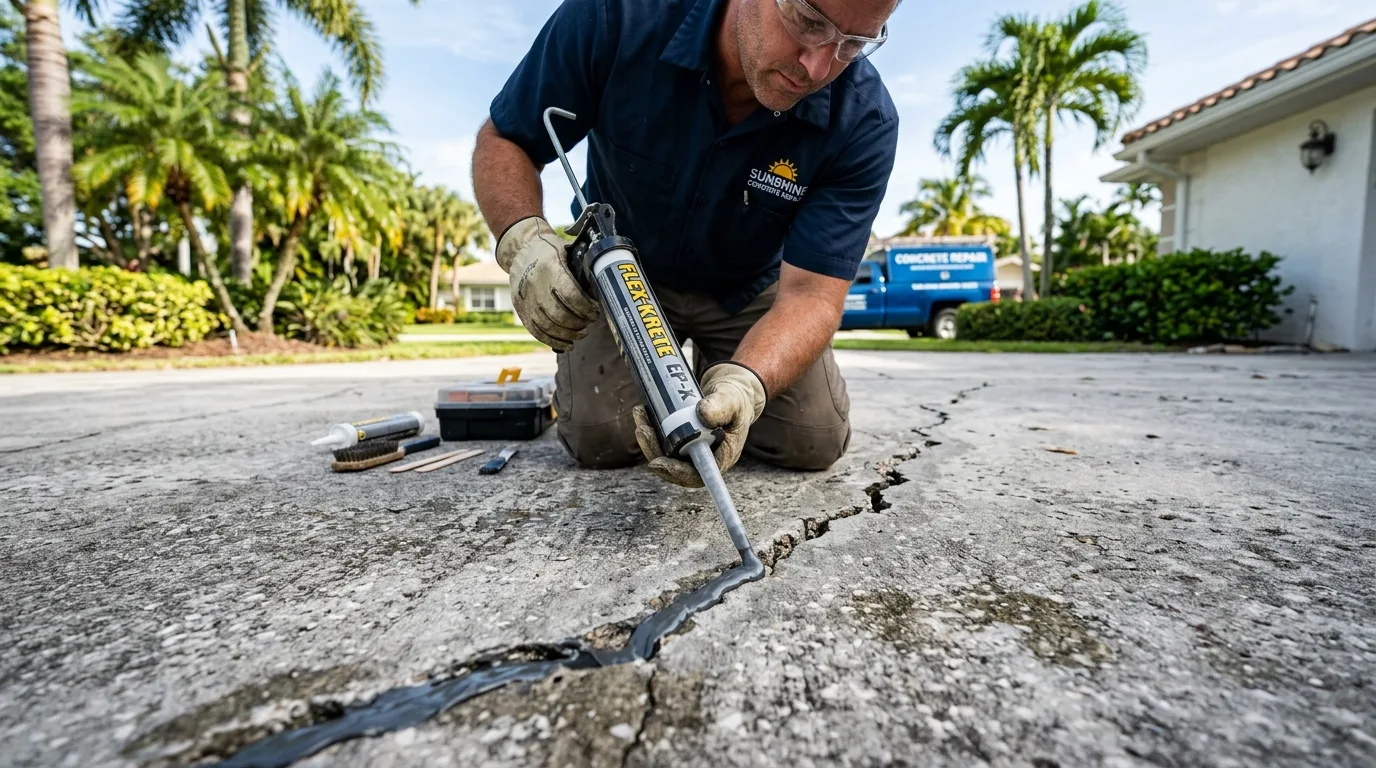
Your concrete patio looked great when it was installed, but something is off now — maybe a crack you noticed last wet season, or a section that doesn’t look level anymore. How do you know if it needs a simple repair or if replacement makes more sense? For Margate homeowners, Broward County’s soil and climate conditions add nuance to this decision that a national guide won’t cover. Here are the five signs to watch for, and what each one typically means for your patio’s future.
Free Concrete Patio Assessment in Margate
We give honest repair vs. replacement recommendations — no upselling, no guesswork.
Why Margate Patios Develop Problems Faster Than Some States
Concrete patios in Margate operate in a demanding environment. Broward County’s high seasonal water table saturates the sandy sub-base during the May–October wet season, reducing its bearing capacity and causing slabs to flex. South Florida’s intense UV radiation degrades unsealed surfaces. And the warm year-round temperatures that make patios in neighborhoods like Buttonwood Hammocks and Coral Bay so valuable also mean the surface is in constant use — no winter rest period that lets minor damage stabilize.
Catching problems early is the key to keeping repair costs manageable.
Sign 1: Cracks That Are Growing
Not all cracks indicate failure. Hairline cracks (under 1/16 inch) that haven’t changed in years are usually surface-level shrinkage cracks that can be sealed with a penetrating product — not a reason for alarm. The warning sign is cracks that are growing in length or width over time.
Photograph any crack and mark the ends with a pencil. Check again in 3 months. If the crack extended or widened, the underlying cause is still active — usually sub-base movement from Margate’s wet-dry soil cycle. Crack filling alone won’t solve a moving foundation. The right approach depends on identifying whether the movement is from soil compression, root intrusion, or drainage failure before choosing a repair method.
Wide cracks (over 1/4 inch) that have developed over 1–2 wet seasons indicate significant sub-base loss and likely warrant professional assessment. At that width, water is entering the crack and undermining the base further each rainy season.
Sign 2: Sections Have Settled or Heaved
If part of your Margate patio is visibly lower or higher than adjacent sections — creating an uneven step at the joint — the sub-base beneath one section has either compressed or been undermined. This is one of the most common patio problems in Broward County, especially in older neighborhoods with established tree roots (common in Margate Gardens and Holiday Springs).
Low settling (1/4 inch difference): A candidate for mudjacking — pumping grout beneath the settled section to raise it back to level. Cost-effective if the concrete itself is structurally sound.
Heaved section (one side pushed up): Root intrusion is the most common cause. The root must be removed or contained, and the heaved section may need to be broken out, the soil addressed, and new concrete poured. The surrounding sections are often still salvageable.
Settled Concrete? Get a Free Margate Assessment
We evaluate sub-base conditions and give honest repair vs. replacement recommendations.
Sign 3: Water Pools on the Patio After Rain
Properly installed concrete patios in Margate slope at least 1/8 inch per foot away from the home’s foundation. If your patio puddles after Broward County’s typical summer downpours — with water sitting for 30+ minutes rather than draining — one of two things has happened: the patio has settled in places, changing its drainage slope, or it was installed without sufficient slope in the first place.
Pooling water on a concrete patio is more than aesthetically unpleasant. Standing water on a concrete surface accelerates the surface degradation process, promotes algae growth, and — in Margate’s clay-pocket areas — can cause expansive soil movement beneath the slab as the soil repeatedly wets and dries.
Drainage correction can sometimes be addressed through grinding the high edge to restore slope. Other cases require breaking out settled sections, correcting the sub-grade, and reporing those sections. A professional assessment determines which approach is appropriate for your patio’s specific conditions.
Sign 4: Surface Is Spalling, Flaking, or Crumbling
Concrete spalling — the breaking away of the surface layer to expose aggregate underneath — is a direct sign of UV degradation on unsealed concrete. In Margate, concrete patios that were never sealed or haven’t been resealed in 5+ years are particularly vulnerable to surface scaling in areas of full sun exposure.
Surface spalling on older patios in Margate (10–20+ years) often appears first in the areas with the most direct sun exposure — typically the section nearest the pool or exposed to western afternoon sun. Once spalling begins, the rough surface retains moisture, which accelerates the process.
Repair candidate: Spalling confined to the top 1/4 inch of a structurally sound slab can often be resurfaced with a polymer-modified concrete overlay. This is cost-effective ($3–$6/sqft) compared to full replacement.
Replacement candidate: Spalling that has penetrated through the full slab depth, or where aggregate is exposed and loose across more than 50% of the surface, usually indicates that the concrete has degraded beyond overlay viability.
Sign 5: The Patio Flexes or Sounds Hollow
If you can feel the concrete flex slightly underfoot when walking — or if tapping the slab produces a hollow drumming sound rather than a solid knock — there is a void beneath the slab. This is one of the most serious warning signs, because a slab over a void is unsupported and can collapse suddenly under weight.
Voids under Margate patios form when Broward County’s wet season raises the water table, mobilizes sandy soil beneath the slab, and carries it away through cracks or edges. The slab remains in place but loses its supporting sub-base. The hollow sound is the concrete literally spanning empty space.
This condition requires immediate professional attention. The options are mudjacking to fill the void and restabilize the slab, or slab removal and base reconstruction. A slab over a void is a structural safety issue — furniture, people, and pets on that surface are at risk of the surface giving way.
Repair vs. Replacement Decision Guide for Margate Patios
| Condition | Recommendation |
|---|---|
| Hairline, stable cracks | Seal with penetrating crack filler — no replacement needed |
| Growing cracks + sub-base movement | Address drainage/root cause first; then repair or replace based on extent |
| Minor settling (under 1 inch) | Mudjacking often viable if concrete is structurally sound |
| Major settling (over 1 inch) or widespread heaving | Full section replacement likely more cost-effective |
| Surface spalling under 50% of area, slab intact | Resurfacing overlay — good candidate |
| Widespread deep spalling + cracks | Full replacement |
| Hollow void sound anywhere on slab | Immediate professional assessment required |
Frequently Asked Questions
How long does patio repair last in Margate’s climate?
Well-executed repairs on an appropriate surface last 8–15 years in Broward County. The key is addressing the underlying cause — a crack fill or overlay over an unresolved drainage problem will fail within 1–2 wet seasons. South Florida’s lack of freeze-thaw cycles actually extends repair longevity compared to northern climates.
Is it worth repairing a 20-year-old Margate patio or just replacing it?
That depends on the structural condition, not just the age. A 20-year-old patio in Margate with sound structural concrete but cosmetic surface issues (minor spalling, discoloration) is an excellent resurfacing candidate. A 20-year-old patio with settlement, void issues, or cracking through the full slab depth is usually more economical to replace. Our concrete repair service page describes the assessment process in detail.
Who pays for patio repairs if the contractor installed it wrong?
If the patio was installed recently and developed problems due to inadequate base prep or drainage design, the original contractor may be liable depending on the contract warranty terms. Florida’s statute of limitations for construction defects is generally 4 years from discovery. If you believe a recent installation was defective, document the damage with photographs and date-stamped notes before contacting the contractor.
Concrete Patio Repair in Margate — Get a Free Assessment
Honest repair vs. replacement recommendations for Broward County homeowners. Call (888) 376-0955.
Related: